Showing posts with label Why I love. Show all posts

Sunday, January 17, 2016

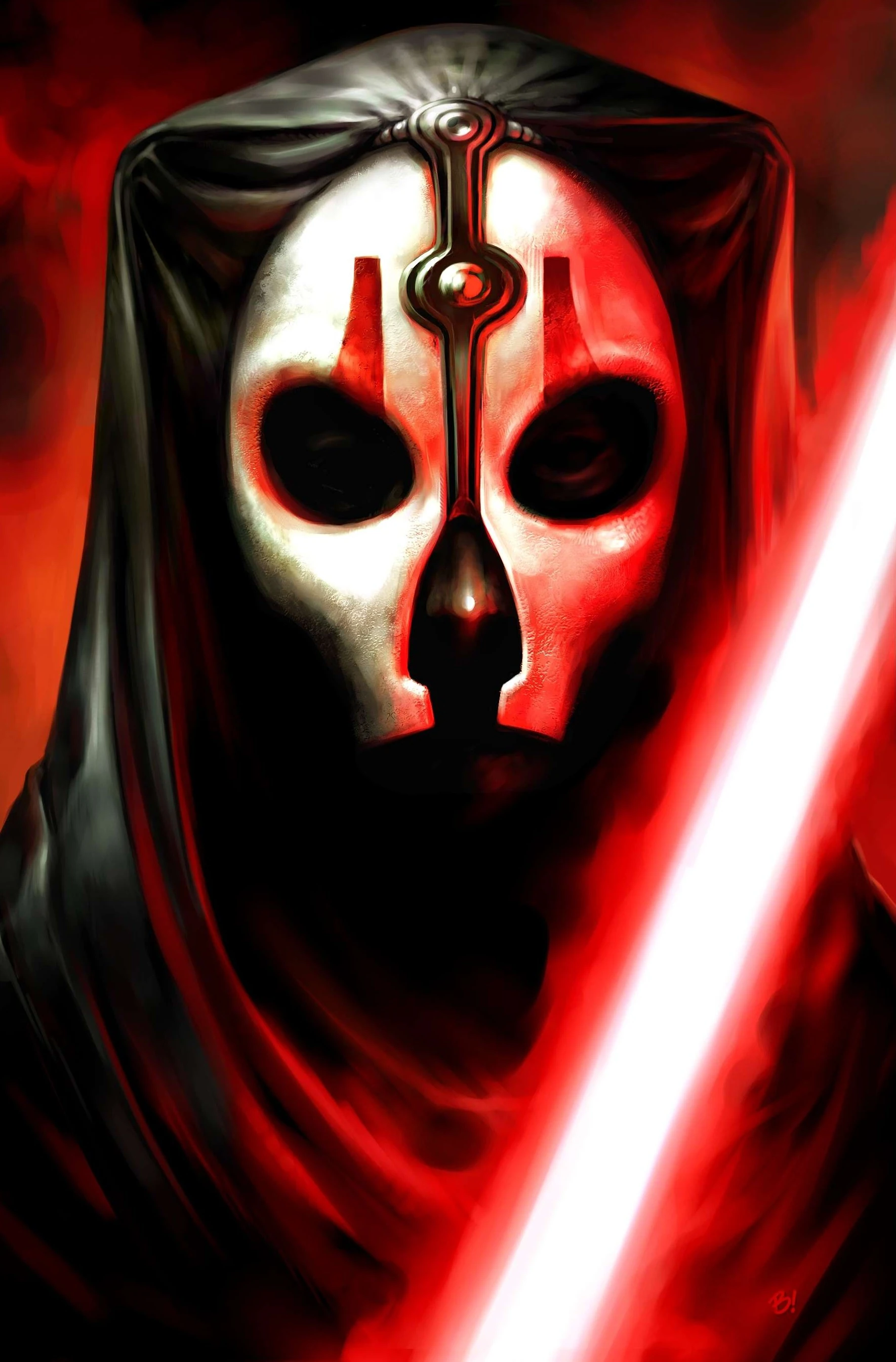
Why I love Star Wars: Knights of the Old Republic 2

As my previous post mentioned, I have played the two Knights of the Old Republic games which are arguably considered to be the best Star Wars games of all time (personally I consider them to be the best Star Wars games out there). Many people have played the first game and believe it to be the superior of the two. I... happen to belong to the other group.

Not that I did not love KOTOR 1. In fact, KOTOR 1 was the game that drew me into Star Wars more than any of the Original Trilogy movies ever did. The game played like a Star Wars film (from the Original Trilogy) and ended like a Star Wars film while giving me an adventure unlike any I had played when I was still in elementary school. Despite my love for KOTOR 1, it was the sequel that holds a special place in my heart. The sequel known as Star Wars: Knights of the Old Republic 2 - The Sith Lords by Obsidian.

Links to purchase:
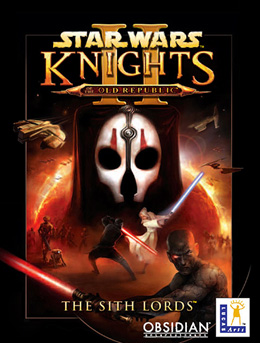
https://upload.wikimedia.org/wikipedia/en/9/9b/KOTOR_II.jpg
KOTOR 2 has the often-unfortunate position of being a follow-up to something amazing. Such positions have negatively impacted many games like Deus Ex: Invisible War (compared to Deus Ex 1), Thief: Deadly Shadows (after Thief 2: The Metal Age), Saints Row the Third (after Saints Row 2), Fallout 4 (when compared to New Vegas but deservedly in this particular case), Dragon Age 2 (after Dragon Age Origins) and many more that could be listed here. For me, this game is among the rare games that matches, if not surpasses, the stellar predecessor in many ways. I am aware that there are people who irrationally dislike the game and if the reader is among these people, the reader may close my page now since I will probably discuss matters that the aforementioned reader will fundamentally disagree with. I am also discussing this game with the Restored Content mod in mind as the game had an infamous development cycle that involved a publisher forced the developers to release the game far too early, leaving it riddled with bugs, hanging plot threads and a lack of closure in its ending. 

KOTOR 2 is the sequel to KOTOR 1 which takes place 5 years after KOTOR 1. The galaxy is attempting to recover from the Jedi Civil War that took place but recovery is slow due to the damage caused. The Sith however have begun to emerge from the shadows once more improved and this time, the Jedi have gone into hiding due to the damage sustained to their Order. The player takes control of the Jedi Exile, a former Jedi who was exiled from the Order and was cut off from the Force. Events lead the player on a mission to stop the Sith threat before the recovering galaxy is torn up once more by war. I will be primarily referring to the Exile as female since her canonical gender is established to be female.

Warning, there will be spoilers from now on so I will leave a SPOILER WARNING here. If the reader has not finished playing KOTOR 2, everything I say from now on will not make sense to someone who has not finished the game. 
Holey person eats codes to get over 9000 as side quacks all become hypnotized save for one who is a part of three but not really while all the other codes everywhere experience the subtitle of the game that the Nameless One stars in whereby holey person must repair the leaky ship before the oil spills into the black sea and at the same time, must find out where the army of three came from. See? 


Go finish KOTOR 2 (or watch a Let’s Play).Use Ctrl+F and "End of Spoilers" to skip ahead to the end.

http://vignette3.wikia.nocookie.net/starwars/images/9/99/JediExileHanddrawn.JPG/revision/latest?cb=20091003183103
What I like about the game is how it is a deconstruction of Star Wars as a whole as it explores the reality of attempting to apply a black and white morality onto real life while addressing the flaws in the beliefs and mannerisms of Dark and Light side users of the Force. It also explores the far-reaching consequences of actions, the dangers of blind adherence to morality, the characters hidden beneath stereotypes and the ever-present reality of grey morality where nothing is truly simple. Where KOTOR 1 felt like a homage to the Star Wars films, KOTOR 2 felt like an analysis of the films that addressed and deconstructed the films and its lore. The game recognizes that the films had a rather childish approach to morality and consequence which leads to a good part of the writing and narrative exploring the problems of such an approach. 
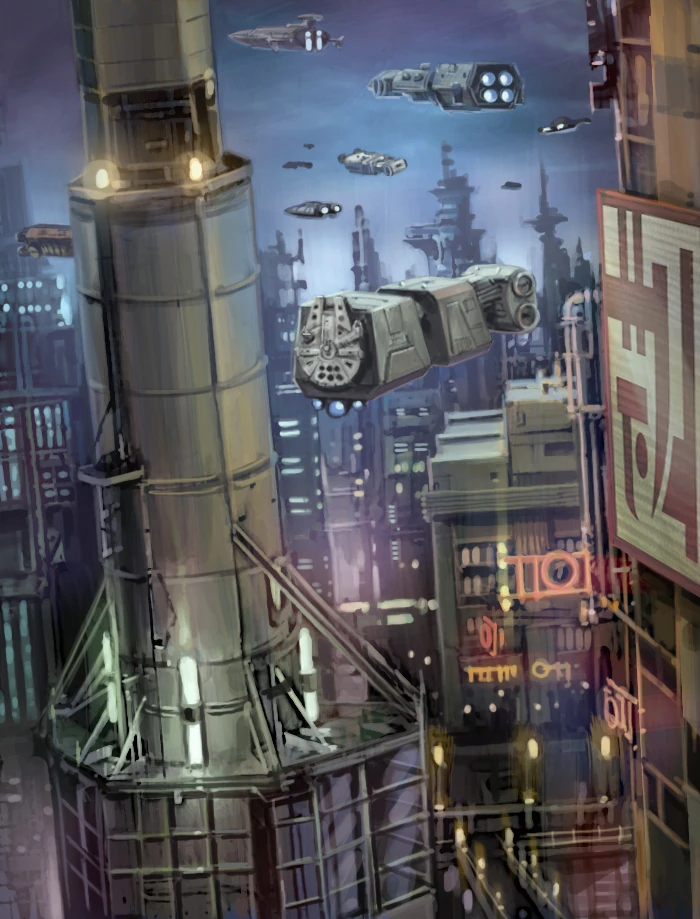
http://vignette3.wikia.nocookie.net/starwars/images/2/26/Narshaddaa_rgb-lg.jpg/revision/latest?cb=20090818200416
One particular moment in the game showcases this issue when a beggar approaches the player and asks for money. The basic options are to help the beggar immediately or to intimidate the beggar to back off. Both decisions in KOTOR 1 would merely result in an alignment shift. KOTOR 2 goes a step further however as the character, Kreia, addresses the player character afterwards pointing out that the player character's chosen action had a negative impact on the beggar. Simply giving money away had only drawn attention to the beggar leading him to be mugged by another beggar who had witnessed the former's sudden and unjustified windfall whereas forceful intimidation had driven the beggar to attack another person for money out of desperation, each action leaving someone to suffer. Both actions, being extremes in the morality of Star Wars, only served to provide benefit briefly and detriment in the long run which I recall made me start to consider all my actions and their far-reaching consequences in-game. While this particular moment may seem heavy-handed in forcing an opinion about the inherent flaws of black-and-white morality, it does work, at least for me, in portraying the presence of consequence in the long term.

http://vignette3.wikia.nocookie.net/starwars/images/9/9b/Khoonda.jpg/revision/latest?cb=20080608085448 
Another part of the game I recall is the response that the majority of the people have towards the Jedi and the Sith which was not positive or ambivalent at best. The regular people of the galaxy do not care for the Jedi or the Sith being on Light or Dark sides of the Force, all they care about was the aftermath of the conflict between the two groups and the damage both sides inflicted on the galaxy. Some characters in game even spout distaste for the Jedi as a result of the damage done due to the seemingly similar sides that wield the same kind of power (to the ordinary folk) waging war and some of these people are not even Sith. Even though Revan saved the Republic by defeating the Sith (or crippled the Republic by retaking his Sith Empire), it did not mean that the galaxy will instantly recover from such a large conflict and it does not mean that all the resentment in the common folk suffering due to the war would vanish immediately. Instead, the Exile will have to live with the consequences of such a war even if it means not being able to talk to people due to being identified as a Jedi. The use of these long term consequences in the game always stuck with me whenever I think of KOTOR 2.

Another aspect of the game that I enjoyed was the depth to the characters and the subversion of character stereotypes, the companion characters to be precise. 


http://vignette2.wikia.nocookie.net/starwars/images/c/c2/Attonrender.jpg/revision/latest?cb=20091106060955
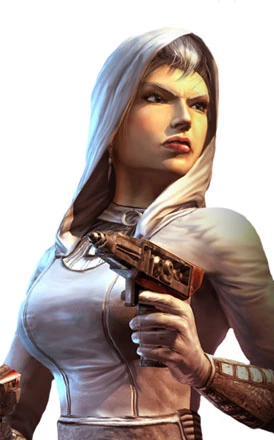
In KOTOR 2, the player character is joined by a variety of party members that seem to follow some form of stereotype at first impression. While some keep to their stereotypes, the rest break away from these norms as the player character builds up influence with them. Take for instance, Atton Rand. Initially introduced as the blaster-wielding scoundrel with a heart of gold, the game begins to reveal that he has some darker secrets he hides from the player character while having skills that a normal scoundrel would not have. It is eventually revealed that Atton was an assassin specialized in killing Jedi who worked for Revan during the Mandalorian wars and has a rather large body count as a result of his understanding of killing Jedi. While this appears to label him as an irredeemable character, he also points out that his loyalty to Revan was not out of malice but out of genuine respect for a man who was trying to save the Republic while the Jedi blatantly ignored the immediate threat due to their unnecessary wariness of perceived dangers. This loyalty coupled with growing resentment towards the inactive Jedi turns Atton into a willing killer of Jedi who took pleasure in killing Jedi until another Jedi revealed his own Force potential. After killing her (either out of love or fear depending on the player's views), he crafts the image of a scoundrel around himself to hide his past but through the player's own interactions and explorations, the Exile can coax the truth out of Atton and eventually train him to master the Force for their mutual benefit.
http://vignette2.wikia.nocookie.net/starwars/images/9/97/Handmaidenpromo.jpg/revision/latest?cb=20070203042715
Another character I distinctly recall is the Handmaiden, or Brianna (who only joins the party if the Exile is male). The youngest of six Echani (a race of humanoid aliens - look them up on Wookiepedia), Brianna gives of the impression of a basic disciplined monk that can teach new techniques. Prior to these practice sessions to learn new tricks, the other Handmaidens in conversations often abuse, insult and put down Brianna for being their half-sister unlike the rest of them since Brianna's mother was not their mother which makes her different from them (though not physically in game ironically). Undergoing practice sessions with Brianna in game however begins to highlight more to the character as she reveals her naivete when dealing with the Force and moral quandaries due to learning from the biggest hypocrite in Star Wars related media, Atris (who represents the absolute worst of the Jedi). The player then gets to argue such quandaries and issues which allows her to learn from another who has experienced life in the galaxy. She winds up escaping her monk-like stereotype and with her attraction to a male Exile, more of her character unfolds to the player such as her training 'procedures' simply being an excuse to seduce the Exile who is in his underwear like her implying some form of perverseness that is rather amusing when revealed. Eventually, she reveals her willingness to learn the Force like her birth mother and via a loophole in her vows to Atris, Brianna can become a Jedi who surpasses her abusive sisters through experience and improved skills.  
http://vignette2.wikia.nocookie.net/starwars/images/7/72/Kreia.jpg/revision/latest?cb=20050824143116
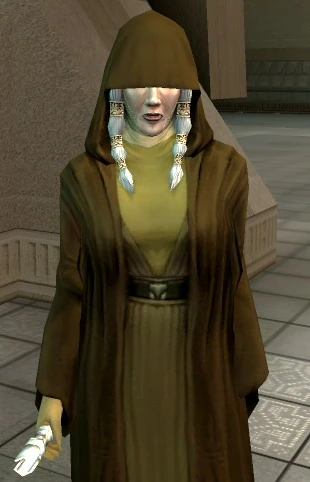
There are other characters that I could go on about but the one I do want to talk about as indicated by the picture is the one with the most divisive opinions surrounding her: Kreia. This character, as mentioned before, is a person who opposes the basic black-and-white morality of Star Wars to a fundamental level; often she would disapprove of decisions and dialogue that veers towards one extreme or the other. Often there are moments where she would criticize choices made by the player but contrary to certain opinions on Kreia, she does approve of certain views. If the player character makes choices or say things that tend to be manipulative, open-minded or grey in intent, she gains approval. Pragmatic choices and views are her preferred options as they can often benefit the individual using them and allows an element of choice in the benefit or detriment inflicted on others. Such an approach fundamentally opposes the traditional actions of the Jedi and Sith which is part of what she teaches the player character somewhat forcefully at times. This is primarily due to her own views on the Force that there were no fundamental differences between the Light or Dark side of the Force; that both are ultimately sides to the same coin but with differing views. The suffering they inflict on the galaxy through their wars and conflicts are ultimately the will of the Force which should be separate from life to ensure freedom from its will. 

The flaw of her views however is her own negative bias towards the Force as a result of her experiences which colors her teachings and beliefs. This bias is a result of betrayals and torments suffered by Kreia when she was cast out of the Jedi Order due to her own students falling to the Dark side during the Mandalorian Wars as a result of her unorthodox teachings and as Darth Traya, she was cast out of the Sith for not being brutal as a traditional Sith Lord. These betrayals and failings have skewed her views on the Force as a whole which while advocating a grey approach to most matters, left her bitter and full of spite to others that oppose her views. The Exile however acts as validation of her views as the game reveals that the Exile is a living Wound in the Force and exists without the Force (your own abilities are a result of drawing the Force from your Force sensitive companions via unseen Force bonds that influence them (why else would a pacifist suddenly obey your commands to kill so easily) and your growing mastery is a result of the deaths caused which you feed upon unknowingly (which justifies how the player character levels up using experience points via kills)). Thus, she attempts to teach you her views and while she fails at destroying the Force, your victory over her by the end of the game allows her to shape the new Jedi Order as the Force sensitive companions you train will follow the teachings that the Exile derived from Kreia until the new Order became complacent, turning the Jedi Order of the prequel films (at least before KOTOR was rendered non-canon by Disney). 

Another thing to note that Kreia, or rather Darth Traya, is also known as the Lord of Betrayal as fitting of her title, she is a master of deceit and manipulation. One could argue that all of her statements bear some form of deceit in each of them to skew the perceptions of the Exile and the player (plus there was the issue that she was Chris Avellone's mouth piece on his own criticisms of Star Wars according to what I have read on the matter). Despite this fact, some of Kreia's criticisms and views on the morality used by the Jedi and Sith along with the expectations of the two sides bear some form of justifiable validity to them and for me personally, opened my eyes to how childish the notions of morality that existed in Star Wars was compared to other works. Kreia challenged the norms, beliefs and lore of the Star Wars universe and whether she was right is up to the person perceiving it. For me, she was mostly right and somewhat wrong at the same time. At the very least, Kreia provides an alternate perspective to the various aspects and notions in Star Wars lore which is why I enjoyed her character even if she criticised my latest decision whenever I was role-playing a naïve goody two-shoes. It should be noted that Kreia lies a lot though as many of her statements have elements of truths and lies to them.
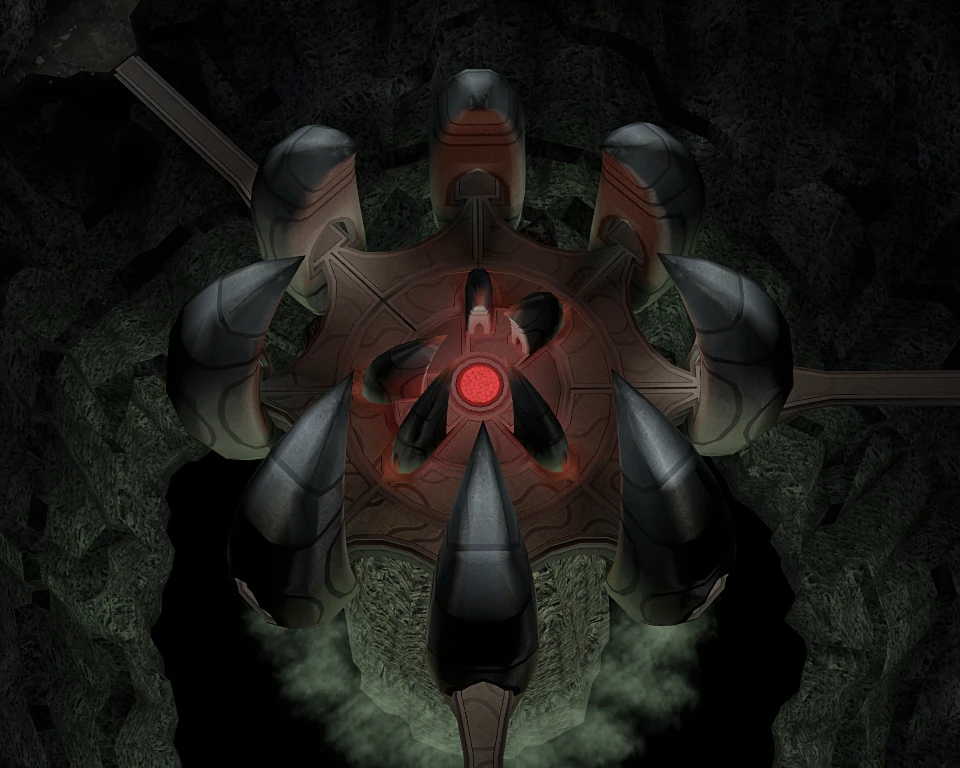

http://vignette1.wikia.nocookie.net/starwars/images/b/b7/TrayusCore.jpg/revision/latest?cb=20120621170944
There are more reasons like the subversion of usual character clichés, the interesting quests and methods to resolve them, the variety of Force abilities and the introduction of Sabre forms (which served as my introduction to the fighting styles used by Force users in Star Wars), and the influence system that encourages actual thinking and understanding of the characters to utilize to its fullest. The reason I am about to talk about here are the main antagonists to KOTOR 2, the Sith Triumvirate: Darth Traya (the Lord of Betrayal), Darth Sion (the Lord of Pain) and Darth Nihlus (the Lord of Hunger).
http://vignette1.wikia.nocookie.net/starwars/images/8/8c/Kreia_Trayus_Hoodless.jpg/revision/latest?cb=20091106171817
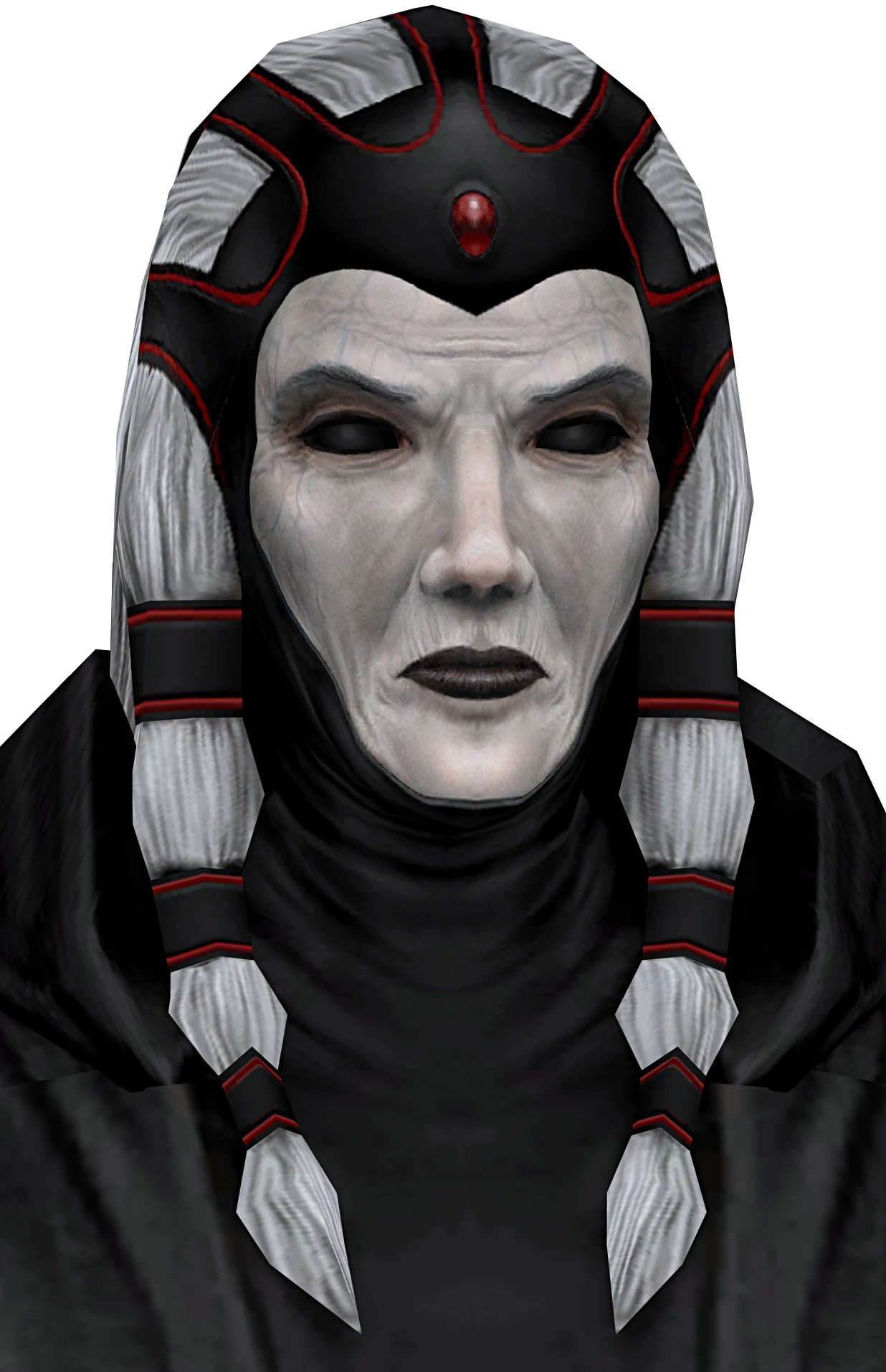
Darth Traya, in a nutshell, lives up to her title through her actions through her actions and backstory. Through all that she suffered, Traya knows of betrayal all too well and knows how to manipulate people for her own agenda. Her skills at this were already hinted by the way she treats the companions around the player character while telling the player of things that the player may not verify completely. Her character is built around lies and betrayals that have elements of truth to them. 
http://vignette4.wikia.nocookie.net/starwars/images/9/9c/Darthsionheadshot.jpg/revision/latest?cb=20091109051019
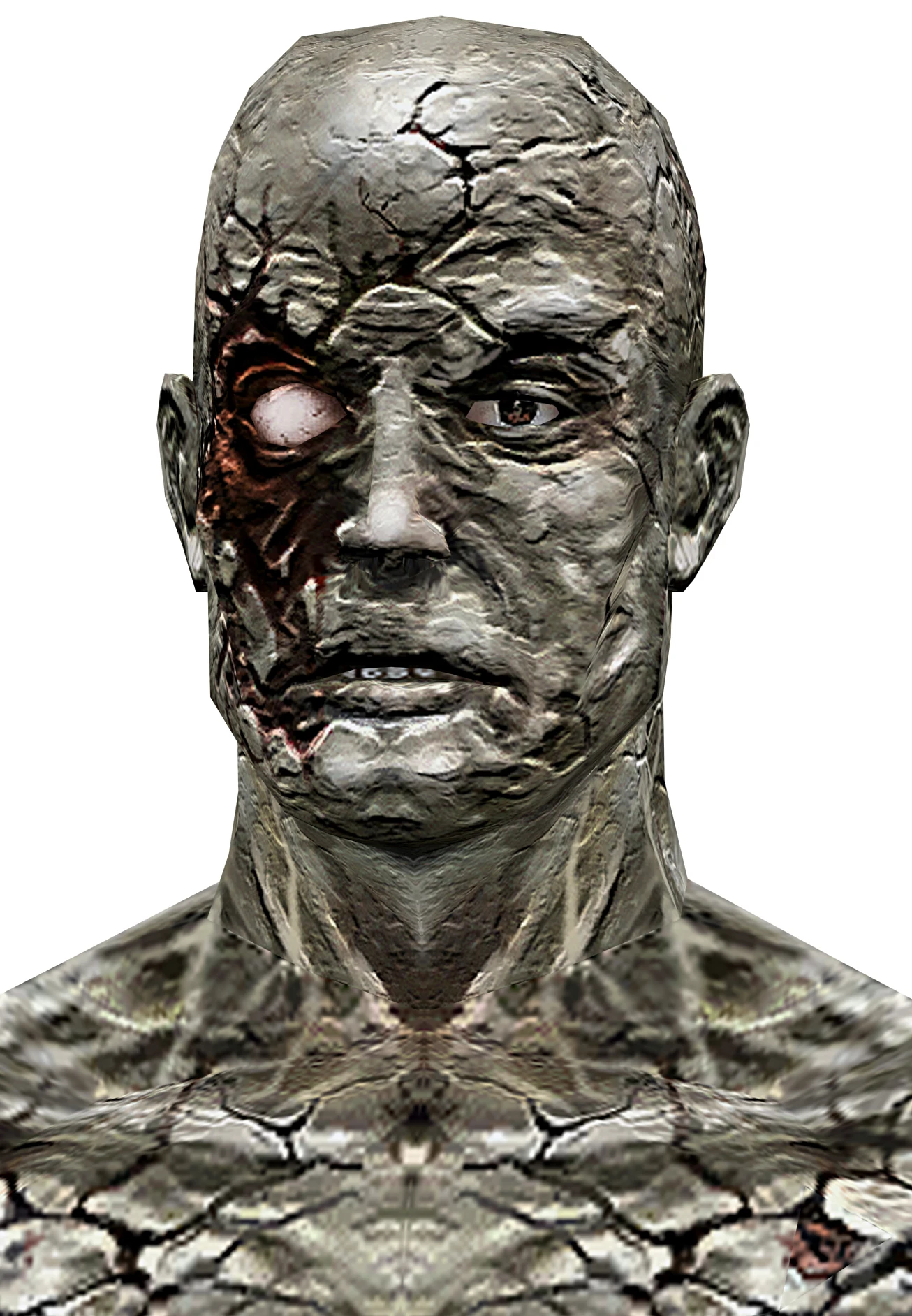
The second of the Triumvirate is Darth Sion, a walking corpse covered in scars and wounds that is kept alive through pain. Sion represents the excessive brutality of the Sith and to an extent, Dark Side users in the universe with his moments filled with death and destruction of those that oppose him. His appearance is both intimidating and terrifying as it would seem that he cannot be put down. That description describes the unique aspect of Sion; the fact that he is immortal. Due to the way he draws from his constant agony, Sion retains a constant link to the living world and thus, his mortal wounds winds up keeping him alive though in immense pain. Luckily for Sion though, he is a Dark Side user and thus, using pain in that manner does not override any moral or spiritual quandaries. It also allows for a rather interesting boss fight near the end of the game where the player character has to use appropriate statements and lines to break Sion’s will in order to convince him to let go of his pain. On Wookiepedia, the Exile’s actions in her fight against Sion is listed as one of a few instances where a Jedi had used Dun Moch successfully to the greatest extent a Light Side Force user could be capable of without relying on the inverse variant that most Light Side users utilise while avoiding the darker emotions needed to use Dun Moch properly. The battle itself is nothing special since the Exile becomes overpowered by the end of the game but it was the richness in the writing during that battle which left positive memories of the experience. 
http://vignette3.wikia.nocookie.net/starwars/images/9/97/KOTOR2Nihilus.jpg/revision/latest?cb=20071122021511
The last and certainly not least of the three Sith Lords would be Darth Nihlus, a living wound in the Force that used to be human. The former human's unique condition and status is a result of the Exile's actions on Malachor during the final stages of the Neo-Mandalorian Wars that preceded the Jedi Civil War of KOTOR 1. While I will not go into detail on how Nihlus was made (the reader could always look it up), I will say that as a result of what he went through, Nihlus became a living wound like the Exile except dominated by his hunger. Due to being a wound in the Force and training by Darth Traya, Darth Nihlus became the strongest of the three simply due to his unique ability to devour the Force to the point where he drains life out of the individuals unfortunate enough to get in his way (I am one of those who believes that Nihlus's ability to devour the Force is not an advanced form of Force Drain but something far worse). In terms of design and writing, Darth Nihlus is my favourite of the three Sith Lords in the game. 

Based on dialogue and bits of exposition, it is revealed that the small number of Jedi in KOTOR 2 when compared to KOTOR 1 is the result of Darth Nihlus's hunger. As it transpires, Atris had decided to lay a trap to draw out the Sith that survived the Jedi Civil War by summoning the remaining Jedi not purged by the SIth Triumvirate to a conclave on the planet, Katarr. Her plan had succeeded, a Sith Lord was lured out. Unfortunately for the Jedi and the planet, the Sith Lord that was lured out was none other than Darth Nihlus. Nihlus then spoke. What followed after was the death of an entire planet save for one person; Visas Marr, future companion of the Exile. Aside from her, every living being (sentient or non-sentient) on Katarr was dead; all devoured by the Lord of Hunger. Darth Nihlus single-handedly killed a planet with the Force and the lore implies that Katarr was not the first world he has devoured.

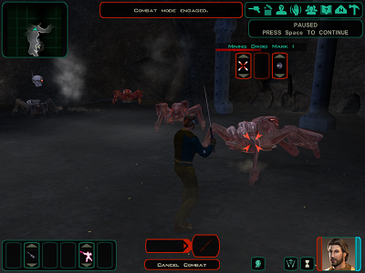
The only downside to this immensely powerful Sith Lord was the actual encounter between Nihlus and the Exile. The actual fight was nothing special as Nihlus winds up being a simple though somewhat challenging encounter but thankfully, there is a valid reason for this. The game establishes that for all of Nihlus's power, he is being devoured by his own unquenchable hunger even as he kills all around him. Even after destroying worlds, his hunger cannot be sated and in time, he will die as a result of his hunger though in that period of time, he would have brought untold amounts of death and destruction with him as he seeks more lives to quench his hunger. By the time the Exile encounters Nihlus, he has not quenched his hunger for a long time and had been tricked by the manipulations of Darth Traya into attacking a planet that bears only a single Jedi rather than an enclave which he was led to believe. When Nihlus and the Exile meets, the player can even goad Nihlus into devouring the Exile. This may sound like a bad idea on paper but the game, at that point, establishes that the Exile is also a living wound in the Force but did not become like Nihlus due to cutting herself from the Force. As a result of attempting to feed off a fellow wound in the Force, Nihlus was left severely weakened and unable to put up a better fight against the Exile, Visas and Mandalore the Preserver. For a better look at Nihlus's strength, there is a video of a cutscene cut from the final release due to time constraints that have been added back into the game via certain mods.

Ultimately, each villain lives up to their title and have abilities fitting of the title they use. While the actual fights in-game are nothing spectacular, there is a strength in the writing building up these antagonists that makes these villains feel even more powerful in their backgrounds than they are in-game. Obsidian's strength here is their writing and as a result of it, I have a high regard for the Sith Lords of KOTOR 2 than Darth Malak of KOTOR 1 (who was a bone-headed fool of a Sith even if he was a powerful duelist).

https://upload.wikimedia.org/wikipedia/en/0/0f/Knights_of_the_Old_Republic_II_combat.png
[Note: This paragraph here is not meant to convey any more points on why I love KOTOR 2 but to recommend some mods that I have used for my own KOTOR 2 playthrough that have worked out rather well. The first of these I have previously mentioned is the Sith Lords Restored Content Mod (TSLRCM) which adds in items, activities, quests and cut content that could not be included into the final game due to the aforementioned development hell. The links for the mod are as follows: http://www.moddb.com/mods/the-sith-lords-restored-content-mod-tslrcm + https://steamcommunity.com/sharedfiles/filedetails/?id=485537937 + http://deadlystream.com/forum/files/file/578-tsl-restored-content-mod/with full credits and respect to the dedicated group who has spent so much time and effort to restore the content that Obsidian wanted to include in the final version. One should not play KOTOR 2 without this mod. Another mod that is included with the TSLRCM is the M4-78 planet mod which restores a planet cut from the final game with its own quests and back-stories to explore. A third that I have used recently is the Extended Enclave mod which adds more scenes to the pivotal moment in the restored Jedi Enclave. I recommend using these mods for the complete KOTOR 2 experience.]


End of Spoilers
Now that I have said my piece, I will state that KOTOR 2 should be tried out by any Star Wars fans or those merely interested in the lore but not the films. KOTOR 2 may not be the Star Wars adaptation that some expect but it is a gem in its own rights (for an adaptation of the Star Wars film elements, KOTOR 1 has that covered). The strength of the writing, the deconstructions, the subversions of character stereotypes along with the exploration of themes and consequences makes KOTOR 2 one of my favourite games of all time. The reader can disagree with me and even leave comments on why but like all opinions, it is subjective. 

Tuesday, July 21, 2015

Why I love Morrowind

Now that I've returned to my home in my own home country, I thought I'd celebrate my return to hot and humid weather by looking back on a game that involves exploring a land dominated by a giant volcano that is very dear to my heart. And before the reader says anything, it has nothing to do with any of Tolkien's works so read the title once more before searching for it online.


The Elder Scrolls 3: Morrowind was THE game for me. The game that finally won me over to the whole concept of gaming and made me an individual that could see gaming as more than a mere hobby or past-time. It gave me an immersive experience that I'm still fond of and once in a while, I go back to Morrowind again. My previous experiences in gaming prior to Morrowind were real-time strategy, first person shooter and Sport games which I enjoyed but felt were lacking till Morrowind came along. It was also the game that wound up establishing my preferred genre of gaming, namely RPGs and single-player games for the immersive experience that allows any player to experience their own story despite the preset story missions being the same for any playthrough. I can understand the appeal of other genres but Morrowind made me a RPG player (along with Kingdom Hearts but that's another side, another story... *nudge nudge, wink wink)


Anyways, here are my reasons why I love Morrowind. Perhaps one of the readers could relate to these reasons or could gain some insight to another person's opinion.


1) The environment

One thing that was odd about Morrowind was the alien flora and fauna of the land. Rather than the typical cattle, horses and wolves, Morrowind had guar, silt striders and nix-hounds that dotted the land filled with peculiar looking plants, especially in other regions. This immediately caught my attention back when I was a child, nervously booting this game that was given to me as a present. The sky was bizarre with two moons that had relevance to the lore of the series (especially the larger one). The alien environment is then left open to the player to explore and understand either by dialogue, in-game books and in some cases, self-comprehension. While Skyrim and Oblivion have given me open worlds rich with lore and back-stories, Morrowind was alien enough to the typical countryside or northern lands to intrigue me for a very long time. In addition, the Morrowind Overhaul mod can be used to update the in-game graphics (which are admittedly dated) to close to current-gen and in my opinion, those graphics do hold up.


2) The thrill of discovery

As I said before, the environment of Morrowind is an alien one that demands exploration. Thus, one has to step forward and travel. This game existed before the age of fast-travel and while I have wished for fast-travel at times (since I was late for family dinners), I can appreciate the lack of fast-travel. This lack of fast-travel forced you to walk around, see the sights and feel the scale of the landscape around. A perceptive eye could even spot the occasional NPC with a quest available or by chance, notice a cave, ruin (of differing types) or even a quest location (that can even be completed early on for convenience). Back before the extensiveness of video walkthroughs and wikis, all people had to rely on were written walkthroughs (at least that's what I wound up relying on) so the world was still left open to imagination. One could read the words of a walkthrough and could still get a mistaken impression of the places described, even more so with the creatures (as I did with my first Dremora). The best kind of player for Morrowind is the first-time player (though having some experience with Skyrim and Morrowind will help in adapting to the world slightly) as they are still fresh and ready to seek out new things (and stumble upon funny occurrences that simply rain from the sky). As a result, there is a thrill to discovering more about this alien land and eventually, figuring out its culture. The sense of progression is felt often with each new lore-relevant place and book being discovered before examined thoroughly.

3) Progression
This is probably where Morrowind differs from its future counterparts. Unlike Oblivion and Skyrim, Morrowind's culture is not favorable against outlanders (or foreigners). Since your player character is a person born outside of Morrowind (as stated to you in the tutorial sequence), you will be treated with disdain (unless you have a high Personality stat). Unlike the penniless adventurer of Oblivion and Skyrim, the adventurer in Morrowind is treated akin to dirt by the local Dunmers (and worse than dirt by some). With the game even telling you (via dialogue) to seek out other activities to do before the main quest, the average player (who read the dialogue) would be inclined to do so (seeing as the Elder Scrolls series has allowed player freedom in progressing the main story). By joining guilds and factions along with completing the occasional side-quest in a town, the player gains a reputation and begins to shift perceptions around them. Suddenly, the town-guard who called you scum might speak in a more polite manner or certain Morrowind locals might greet you favourably than before. As a result, the player can feel greater progression as your actions have contributed to an outcome that you had some degree of control over. Completing certain faction story-lines might even aid you in the main quest (it does help with the politics somewhat) and even locking off other faction story-lines due to conflict of interests between rival factions.
One thing I would like to point out is how superior the guild and faction-based questlines here feel compared to Skyrim due to the simple presence of restrictions, at least in my opinion. In order to advance in rank in a guild or faction, the player must have a certain skill level to do so and failure to do so will lock the rank away. This meant that the player must be worthy of having that rank rather than being given the rank all because you completed the faction's story. In Skyrim, I was often left perplexed at the fact that my Nord warrior (who has mastered the art of stealth somehow) was so quickly elected as the College of Winterhold's Archmage even though he only knew how to cast a healing spell that could only manage a boo-boo and a fireball spell that left most enemies irritated by the unexpected warmth that fades too quickly. This criticism could also carry over to Oblivion but at least the faction story-lines were longer and had depth to them (at least the Thieves Guild and Dark Brotherhood did). While the story for the Thieves Guild and Dark Brotherhood in Skyrim (I'm beginning to notice a pattern here) were detailed with some depth, they were shorter and had excessively rapid progress (also going to point out the Companions for the rapid development from newbie to Inner Circle member). I admit that it was rather tedious but it made the experience better as the moment when you reached a higher rank would feel like an accomplishment rather than a mere add-on to your list of titles.

4) Main Quest
This might be a stretch and I can certainly understand why with the lack of an oncoming threat (a mod fixes this somewhat) by the game's main antagonist but there was something to this game's main quest that I feel is superior to Skyrim and to a lesser extent, Oblivion.

Warning SPOILERS WILL BE PRESENT. The game centers around the Nerevarine Prophecies which speaks of the reincarnation of the ancient Chimer hero, Indoril Nerevar who will unite the land and banish the threats to it's people. You are a prisoner (as per the norm of an Elder Scroll game) who was born on a certain day (when a special constellation was in the sky) to uncertain parents that is being released to Vvardenfell, a major part of Morrowind (though not it's capital). Immediately on release, you are sent to the local leader of the Blades (the Secret Service and spy group of the Septim Empire) to be recruited as a member of the Blades. After a few quests (that provide background and opinions on the lore of the land along with the lore regarding the prophecies), you are told of your purpose. The prophecies state that the initial signs of an incarnation is the individual being born on a certain day to uncertain parents. You happen to fulfill these characteristics so the Empire sent you to fit the bill to make sure that the fabled hero that will drive away the threats of the people will not drive off the Empire, that has occupied Morrowind, seeing as they have an employment contract. As all this is going on, there are signs of a resurgence of the Sixth House, a long-lost faction that was thought to have been wiped out long before the events of the game that belonged to the game's antagonist, Dagoth Ur. A visit to the local indigenous nomads(the Ashlanders) confirm that you are a potential incarnation but nothing more as of the moment though they do provide their own perspective and views on the status quo in Morrowind. After an encounter in a Sixth House base that leaves you with Corprus (an incurable and fatal disease) while marking you as an enemy of said faction, you are cured of said disease and are left with a degree of immortality (namely being unable to die of old age or sickness nor being able to age or get sick which is a basic side-effect of the disease).

This winds up fulfilling yet another criteria of an actual reincarnation and this time, the circumstances become murky. While the prophecy states said criteria will be held by an actual incarnation, your own immortality was artificially made by an ancient and powerful wizard. This becomes even more murkier when at a later visit, he reveals that the cure he used on you failed on every other test subject after. Is there divine intervention that is allowing you to fulfil these criterias or is it chance or is the prophecy actually true in your case? The next quest then reveals another twist that the game has hinted at explicitly: the teachings of the Tribunal Temple (the main religious body of the land) may be false and the gods (Almalexia, Sotha Sil and Vivec) worshiped might be frauds that have usurped their original ancestors' positions (the Daedra). This flips the established lore of the land (if it was not already flipped for the people that did not read between the lines) and makes you ponder at the truth while showing off the fact that history was written by the winners (as it is in real life at times). One might wonder if the Ashlanders were completely right about their beliefs or the Tribunal have been accused of something they are innocent off (though their jail and sentences for religious dissenters may suggest otherwise) or like most things, it is somewhere in the middle. After you fulfil more and more quests, you wind up obtaining the ring of Moon and Star, the mark of the true reincarnation that only Nerevar or the Nerevarine may wear. Once again, one might be left pondering if there is actual validity to this prophecy, or was it circumstance or divine providence that allowed you to fulfill it? After fulfilling the rest of the prophecy (I have gone on too long and need to shorten this), you met one of the Tribunal, Vivec who gives you his personal account and a possible interpretation to the truth of the Tribunal's divinity and the claims of the dissident. After that, you defeat Dagoth Ur and finally fulfil the prophecies (or the initial duties of the prophecies). The Tribunal expansion expands a bit more on this while Bloodmoon simply provides a new sandbox with its own main quest to explore after the aforementioned two.

Immediately after the main quest, NPCs act differently to you. They greet you with reverence and respect, knowing you are the savior of the land and are in complete awe. This also took place in Oblivion but in Skyrim, only the guards will acknowledge you as a hero. The other NPCs do not even react to you. This was the main flaw to the main quest in Skyrim for me as your actions seem inconsequential to the land and its people. In Morrowind, defeating Dagoth Ur does affect the game as Sixth House NPCs are restored to normal (the ones in town) and the Blight storms are stopped for good (though ash storms will still persist.) In addition to this, the main quest has added complexity to it that could leave a player pondering the validity of being the Nerevarine and the truth to the history of the land (involving the War of the First Council). What helps (which I failed to mention in my long paragraph of the main quest) is the fact that books and documents along with dialogue by quest NPCs have provided more information that, while subjectively biased, has some degree of truth to them and added to the collected information that built my opinion on the subject. In my case, I wound up believing that there was some divine manipulation involved in my character becoming  and that the god, Vivec was mostly (and note the phrase mostly) truthful in his account of the truth. SPOILERS OVER These complex notions and actual NPC reaction have been lost in Skyrim and part have been lost in Oblivion though the latter did improve with an actual incoming threat by the game's antagonists. The main quest was good enough to keep me interested in following it whereas Skyrim lost me after a while. 

4) Soundtrack
Just going to bring this up seeing as the entire soundtrack is in my liked video playlist on Youtube. The music is well-suited for travelling and exploration with the main theme of Morrowind influencing future Elder Scroll games. I personally enjoy it and have used it as music for morning/evening walks (until the combat music rolls in, then it becomes a frantic jog from some imaginary figure of terror). One of my memorable experiences in real-life was walking the walls of York while listening to the Morrowind soundtrack which made the strenuous walk feel exotic and relaxing at times. 

Summary
Overall, I liked Morrowind for these main four aspects and more that my sleep-deprived mind may not be able to remember (I guess I forgot customisable enchantments and spell-crafting...). I do acknowledge that the game has flaws; the combat system, the dated graphics, the base game's assets (animations, bodies etc.), wall of text dialogue and various bugs. Yet, I still love this game and would gladly play it even when I have become old and weary (unless Elder Scrolls 6 blows me away which it may not). Skyrim fans may be able to experience Morrowind via the Skywind mod (that is not fully available at time of writing) but for me, I will return to a (modded) Morrowind where I can think up plausible ways for my character to be a member of two rival guilds.

P.S: I never completed the House Telvanni faction quests as my save with said Telvanni mage was corrupted. That dark-haired Dunmer maiden would be forever locked in a coma until I remake her again...

Monday, June 22, 2015

Why I love Silent Hill 2

While I am mainly a purveyor of role-playing games and the rare shooter with good storyline, I have a fondness for survival horror due to the immersion it creates through atmosphere and tension. While most horror games seem to operate solely on jump-scares (much to my chagrin due to my discomfort with sudden shock), I still glance over to the genre for gems that reach the level of one particular game. While the third game of the series made me more feel scared playing it, the game I consider the crowning gem when looking at survival horror is Silent Hill 2 (for PS2, PC - and ignore the HD Collection that ruined it with terrible design flaws).

[THERE WILL BE MINOR SPOILERS HERE! PLACE THAT POT ON YOUR HEAD AND KEEP IT ON TILL YOU REACH THE BOTTOM! Also, this entire post will be based on my own interpretation and what I can recall]

Firstly, I will acknowledge that Silent Hill 2 isn't a perfect game. There is no perfect game as there will always be some flaw that is linked to the very nature of the game itself such as genre limitations, technology or over-expectation of the gamers etc. In fact, I will address the main flaws of Silent Hill 2 here, namely its gameplay and camera that harkens back to the gameplay of older survival horror games that have faded away over time (the cameras were probably a change I could live with). The player character, James Sunderland, moves like a tank and fights in an inefficient way (though the latter can be justified since he is a normal man rather than some super soldier with combat training). In addition, the methods used to proceed past a locked door or certain puzzles can be rather ridiculous (using hair as string for a makeshift fishing line with a hook to scoop out a key from a drainage vent while ignoring the many items you had that could've used to pry the vent).

If that is the case, why did I state my feelings for this game in the title? I can give several reasons why: The story, the horror element, the atmosphere and the experience. In terms of story, it moves away from the cult-based horror of the first game that made the human antagonists seem like brain-dead fanatics (and may turn off some people who regard such fanatics as comic characters) and gives us a personal story. The town itself acts like a living entity that draws individuals with extremely negative emotions to it, presumably as a result of the cult awakening a strange force that was already present within the land of Silent Hill.

This story is about James Sunderland, a man who receives a letter from his beloved wife, Mary, after her death from 3 years ago who tells him to look for him at Silent Hill, the main setting of the series. He arrives to an abandoned town covered in fog and eventually encounters grotesque creatures that have distinctive features that appear to be referencing something linked to the character. James however travels alone into this town, in a constant search for his wife (fully justifying why he is unable to stop searching) and even when he encounters other individuals in the town, those individuals act in subtly off ways that hint at a darker nature underlying the individuals which keeps them from connecting with him. Add in a sexualized doppelgänger of his wife and a distinct and invincible creature that apparently seeks to torments him to complete the equation for a twist in the story. The twist in the story was a decent twist to a personal story involving a young couple and a second playthrough (or closer examination of the events in the game) will allow you to see the foreshadowing to the twist of Silent Hill 2. This is further aided by the symbolism throughout the game with frequent links to  punishment, drowning and sexualisation that appears throughout the game providing greater context and depth to James' lonely journey of torment into the town. The reason for this bare-bones explanation is to avoid major spoilers for any potential players. If you wish to be spoiled, you could watch a playthrough or play the actual game.

The horror in Silent Hill 2 isn't one completely based in the typical supernatural conventions of ghosts, mutants or zombies. The horror here is a psychological one based on the human condition where certain darker aspects of humans are laid bare through the characters (not to the extent that it completely reflects it but acts as a showcase for a story) and leaves a strong impact on the narrative. The horror here is also subtle with a constant tension maintained through the constant obscuring of perspective as per the norm of a Silent Hill game with fog in it. It is the atmosphere of the town, constantly covered in fog or darkness, that maintains the tension with barely any jumpscares that merely startle an individual. As a result, what you get is the fear induced by a lack of presence whereby the anticipation of something terrifying already creates the fear that is constantly kept to a high degree until you reach certain moments that allows it to relax. The atmosphere created by the setting creates the horror and enhances it through limiting one's perspective (though the camera is still something to criticize at times). This is one reason why the HD Collection is disliked as the fog is removed from the game, removing the horror element to the game. I can acknowledge that it is not that scary at times and that the horror is not that good in creating fear though it does leave a stronger impact on players than most horror games, for me at least.

At the end though, playing this game was a fantastic experience for me as I immersed myself into a personal story that was filled with psychological horror and left me thinking about the ending and entire story for a couple of days. The symbolism and motifs along with the many possible interpretations often left me standing still in a shower, thinking about their links to the main story. It had a profound impact on me as the game showed me an example of gaming being used to convey a story and how the interactive nature of gaming enhances the experience in a way that motion pictures, books or artwork are unable to. Even now, I look back fondly at my time with the game which I have done for few other games such as the Baldur's Gate Trilogy, Planescape: Torment, Deus Ex, Morrowind and several other I do not remember.

I know this looks like I'm simply a fanboy of Silent Hill 2 but I would like to point out that this is a post about why I liked this game with minimal amount of spoilers in it. If I did an actual review, I can point out flaws and can admit defeat should a superior survival horror experience creep up to me. For the record, I do acknowledge that Silent Hill 1-4 were well done horror games though 2 was the one that had the adequate amount of elements that made like it more. 3 is still the scariest for me though...

P.S: The soundtrack is good, coming it at the right moments to convey the mood of the moment with an opening theme that I still listen to on certain occasions. It isn't enough to make a short paragraph about but it should still be noted